Showing posts with label 1860's. Show all posts

Wednesday, October 12, 2016

Epsom Grand Stand Pigeon Pie

Things A Lady Would Like to Know Concerning Domestic Management and Expenditure, by Henry Southgate [1867]

IT'S ALIVE

Epsom Grand Stand Pigeon Pie.--Line the bottom of a pie-dish with 1 1/2 lbs. of rump-steak cut into pieces about 2 inches square, seasoning it well with pepper and salt.  Clean the pigeons, rubbing them with salt and pepper inside and out, putting rather more than 1/2 oz. of butter into the body of each bird; lay them on the steak, and put a slice of ham on each.


Add the yolks of 4 eggs, and half fill the dish with stock.  Put puff paste round the edge of the dish; put on the cover; and put three of the feet, cleaned, in a hole at top of the crust.  Brush it over with the yolk of an egg, and bake in about 1 1/4 hours in a well-heated oven.  Pounded mace may be added to the seasoning, if liked, and each pigeon covered with a piece of fat bacon to keep them moist.

I feel like the pie is giving me the bird.

Properly this should be served with grilled salmon cutlets, stewed cucumber, and curate pudding. 
Verdict: Well, this certainly is a pie crust filled with meats and gravy.  The taste is about what you would expect of meat chunks and soggy crust. As I do not have access to pigeons... I tell a lie, my neighbor's pine tree has a whole colony.  Anyway, I didn't use pigeons.  These are Cornish game hens.  They have a lot more fat on them than pigeons presumably do, so I didn't stuff them with butter or lay bacon on them.  Accordingly, I did not have pigeon feet to use as garnish, so I substituted with this offensive chicken foot which made the children scream a little.  And me.  I screamed a little.  It also made the house smell like burning fingernails when it was baking, which was pretty unsettling. All agreed that this was definitely a pie filled with meats and gravy.  No one agreed to eat the chicken foot, despite all my best arguments.


Tried to give it to the cat.


Cat said no.


Friday, January 9, 2015

Duck Stewed With Green Peas and Marmalade Pudding

Things A Lady Would Like To Know  [1867]

The thought for today's menu from the above cookbook is: 
 Education is not that which smothers woman with accomplishments, but that which tends to consolidate firm and regular system of characterthat which tends to form friend, companion, and wife.'—HANNAH MORE.

Very true. Which is why I am am just literate enough to puzzle out a cookbook. Without that skill, I wouldn't be able to provide my husband with horrifyingly overcooked peas. 


 Duck Stewed with Green Peas
Prepare a duck as for roasting, but do not stuff it. Put a small piece of butter in a stewpan, and nicely brown the duck, take it out, and brown a table-spoonful of flour in the remaining butter, and add to it half a pint of beef stock; let it boil, return the duck, put in also 1 quart of peas, with a bunch of sweet herbs, including a little mint and sage, cover close, and stew till done; remove the herbs, dish the duck, cover, and surround with the peas.


Marmalade Pudding
—Mix 1/4 lb. suet, finely chopped, with do. bread-crumbs in a basin, 1/4 lb. marmalade, and do. sugar; stir well together; beat 4 eggs to a froth, and gradually mix well with the ingredients; put in a mould or buttered basin; tie down with floured cloth, and boil for two hours. When turned out, strew fine sifted sugar over the top. This pudding will look very pretty if stoned raisins are tastefully arranged before the mixture is poured in.


Verdict: 

Duck: It is the first time the mister or myself has had duck. I've been keeping my eye out for one for years, and finally a deeply discounted one turned up in my grocer's freezer.  Browning it was a challenge, because it was slightly to big for the pot. After slopping raw duck juice on myself and my stove a few times, I got angry and broke its tail bone with a mallet. Which sprayed more raw duck juice. For all that, the taste was totally unexceptional and bland. The peas were a touch away from dissolving into baby food. Consequently, the baby adored them. The rest of us did not. 

Marmalade Pudding: I cheated and got pre-shredded vegetable suet at a British import store. And it was lovely!  Still very solid. And still a bit of "mouth-hug" (thanks to a British reader for that word), but nice. Better warm, as when it got cold the fat got all gritty.  Having the quantities by weight is a great help, because most similar recipes call for things like "a pennysworth of bread."  This is extremely unhelpful.  

*"do."= "ditto"

Friday, September 13, 2013

Mock White Fish (Vegetarian Dish.)

Aaaaaand I'm back!  I'm going to go ahead and blame it on the fact that today's dish took six months to make.  Mainly in my backyard.  And why?  Because you can't buy salsify.

What is salsify?  Let us refer to the Horticultural Register and Gardener's Magazine [1836]

Left: the only attractive specimen obtained.  Right: what most of them looked like.  It isn't the salsify's fault.  My carrots are also pretty homely. 

Salsify is a native of England, and is universally esteemed there to be very wholesome and nutritious.  So much so, that there are but few families that have a garden, who are without a profusion of this delicious culinary vegetable.  The root, which resembles a parsnip in appearance, is white, long and tapering, and is the part most valued for culinary purposes.  It is boiled and eaten like a parsnip, or parboiled, cut into slices, and fried, and dished up for the table as a sauce for boiled fowls, turkeys, &c.  When sliced and fried in batter, it very much resembles in taste the oyster, whence its local name, Vegetable Oyster.  

Salsify is one of the many root vegetables that have fallen out of favor with the advent of mass produce transport, along with Jerusalem artichokes, rutabagas, and turnips.  It was very popular in the 1800's, mainly as a fish and oyster substitute.  I suspect its popularity was also due to its color.  Victorians were huge fans of any white- or cream-colored food, to the point of engineering ordinarily colorful vegetables to be pale and anemic looking.

I have wondered for a long time, however, how well this hideous vegetable actually works as a substitute for fish.  And today, my dream has come true.


Mock White Fish (Vegetarian Dish.)
Mrs. Beeton's Everyday Cookery (1861)

Ingredients. --Salsify, milk, butter, flour, lemon-juice, breadcrumbs, salt and pepper.  
Method.--Scrape the salsify, cut the roots into 1-inch lengths, cover them with lemon-juice, or white vinegar, and water, and let them remain 1 hour.  Drain well, barely cover with boiling salted water, cook gently until tender, then strain and preserve the liquor.  Take equal parts of liquor and milk; to 1 pint allow 2 oz. of butter and 1 1/2 ozs. of flour.  Heat the butter, add the flour, stir and cook for a few minutes without browning, and put in the mixed liquor and milk.  Stir until boiling, season to taste, and add a little lemon-juice.  Place the salsify in coquilles, cover with sauce, sprinkle thickly with breadcrumbs, and add 2 or 3 small pieces of butter.  Bake until the surface is nicely browned, then serve. 
Time.--To cook the salsify, from 25 to 30 minutes.  Average cost, 2d. to 3d. each.  Allow 1 to each person.  

Verdict:  Danged if when I was peeling and grating, it didn't smell vaguely of fish.  Not... not food fish, but more like that smell when you walk past the fish department at the grocery store.  Sort of like raw fish and a little like cleaning solution.  Most salsify recipes tell you to drop the pieces into water while you are working, and this is a good idea.  On exposure to air, they start turning black.  They also leak white milky sap onto your hands, which make you smell slightly like a fish counter.  

But does it taste like fish?  Yes.  It actually does.  In a mushy, squishy way, similar to cod.  The lemon juice in particular makes it taste very close.  I should mention that cod is my least favorite fish.  I ate two pieces of mine, Husband ate most of his, and 2-year-old ate the rest of mine, cramming pieces in her cheeks like a hamster, chanting "Salsa-feeeeeee!  Salsa...FEEEEEEEEE!", and ignoring her spaghetti.  I suspect she liked the mushiness and the sound of the word "salsify."

This would be a good dish to make if you had time to spend, space in your garden, and a serious and worrying grudge against a vegetarian frenemy who hated fish.  

Thursday, January 27, 2011

Worm Castles

This guest post is from nali (also known as "my mom"), who informs us about hardtack. Splendid! Hopefully this is the first of a few guest posts. Try out those recipes and send them in, readers!


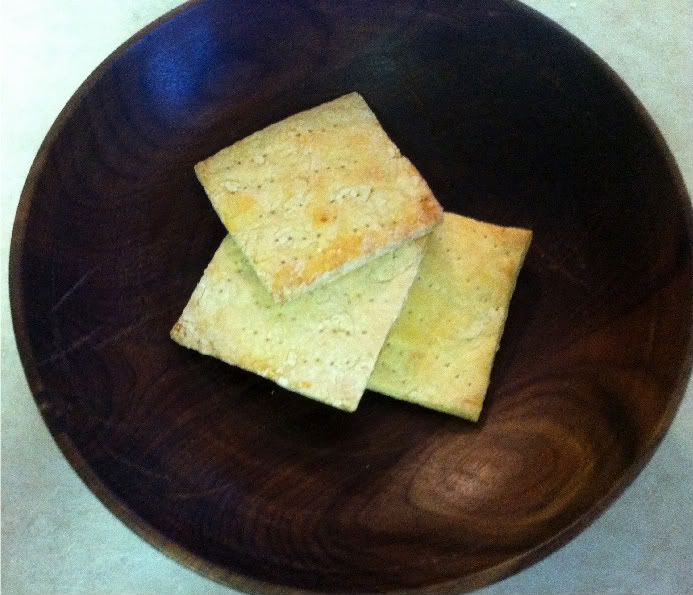
When the traveler must travel in space as well as time, life-sustaining travel food is a necessity. A food staple of the Civil War soldier was hardtack, also sometimes called worm castles due to the infestation of ‘worms’ living in the hardtack. During the war, most hardtack was made in government bakeries, but it could also easily be made at home.


The objective with hardtack is to make a food that will not spoil or mold before it is eaten. It must also last a long time. I have made hardtack that was perfectly edible after a year in storage with no refrigeration. So what is the downside? It is bland....horribly, horribly bland. Still, it will sustain life. The secret to its long life is the lack of ingredients which are prone to spoilage.

Mix together:
5 cups of flour
1 cup of water
1 1/2 teaspoon of salt

Sometimes it is necessary to add just a bit more water, but don’t put in much! Knead the ingredients until they hang together enough to roll out with a rolling pin. I usually put the dough in a pastry cloth to help it stay together while I work on it. Roll the dough out until it is about 3/8 inch thick. This is not as simple as it sounds. This dough is rather dry and doesn’t roll easily. You’ll give your arm muscles a really good workout!

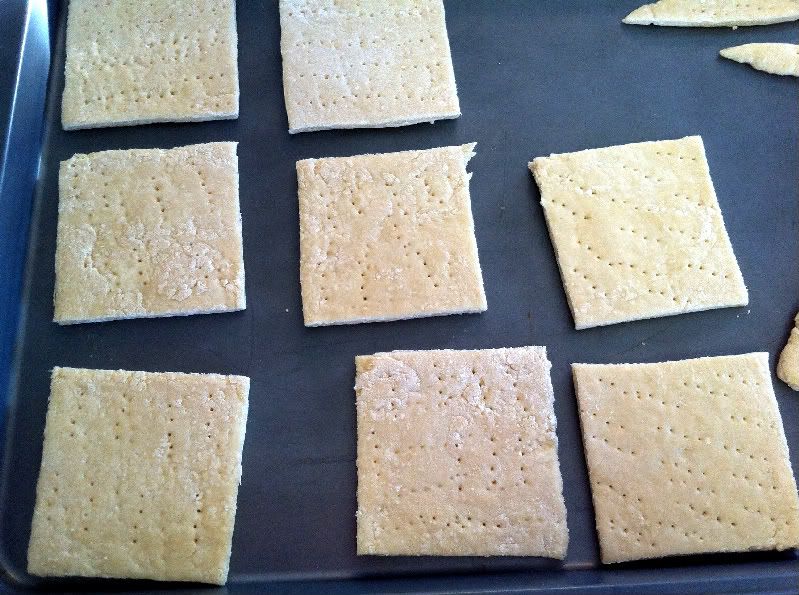
After it is rolled out, cut it into 3 inch squares, then use a fork to poke lots of holes into the hardtack.


Next the hardtack must be baked until all moisture is gone. I have tried it two different ways. Way #1 is to bake it at 400 F for 30 minutes. I found it did not get quite dry all the way through. Way #2 is to bake it at 225F for about 2 hours. Whichever way you choose to do it, make sure it is completely cooked.

Once it is cooked, it is almost ready to eat....or saved for traveling.

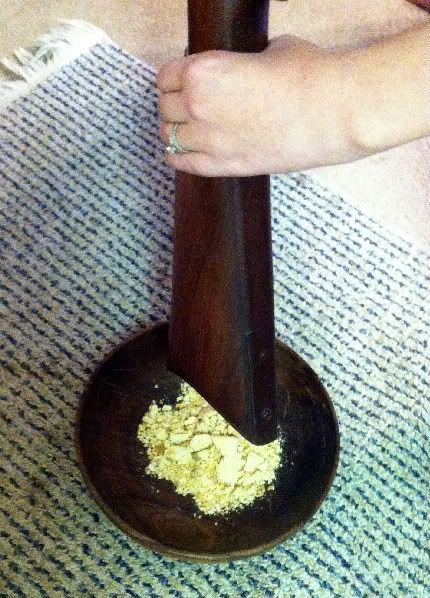
Like soldiers anytime in history, Civil War soldiers were inventive with the ways they ate their ration of hardtack. Eating it plain is just an invitation to break a tooth. Here are 3 ways to use your hardtack. First, put your hardtack on a hard surface and use your rifle butt to crush it.


Once it is crushed you are ready to begin to prepare your meal.


1. Hardtack Mush: Mix hardtack crumbs with hot water until softened. Eat.


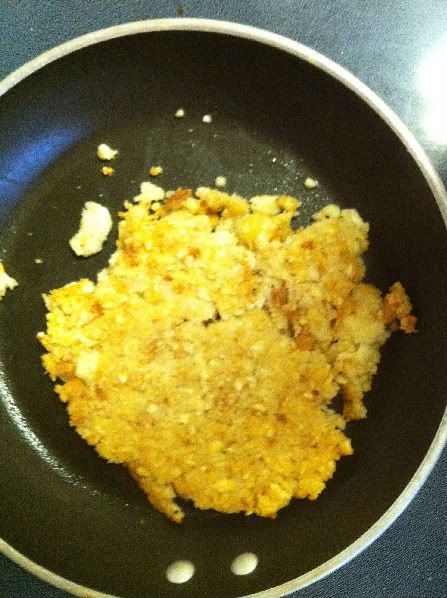
2. Hardtack Pancake: Mix hardtack crumbs with hot water until softened. Form into a little pancake and cook in pan over fire. If you can find some syrup or jam, that would go well with it.


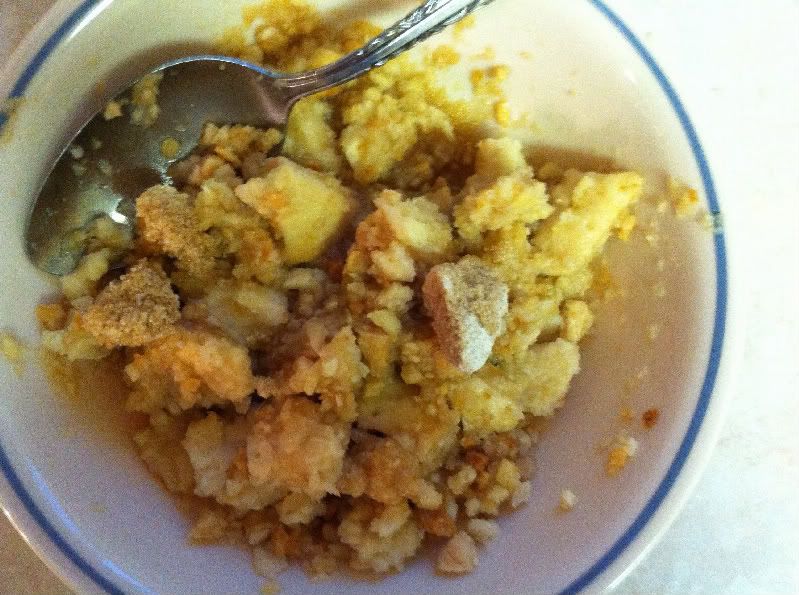
3. Hardtack Pudding: Mix hardtack crumbs with hot water until softened. Mix in a little bit of brown sugar before serving.


For a verdict, we enlisted the services of two actual soldiers in order to get a genuine reaction. To my surprise, they both ate all three items and cleaned their plates. Maybe a true soldier will just eat everything. One commented he’d had worse and he’d had better.

The least favorite was the mush. This was just warm, soggy hardtack crumbs. Still, if a person were hungry enough, it IS edible.

The easy favorite was the pancake. The crispiness from cooking made a nice texture. I’m sure the maple syrup also helped.

The pudding with the brown sugar wasn’t too bad either. In a travel situation, it would probably be easier to prepare than the pancake as it doesn’t require extra cooking.

Happy Trails to you!